
Psychedelics Education
Psychedelics and Habit Change: What Emerging U.S. Research Actually Shows
Nov
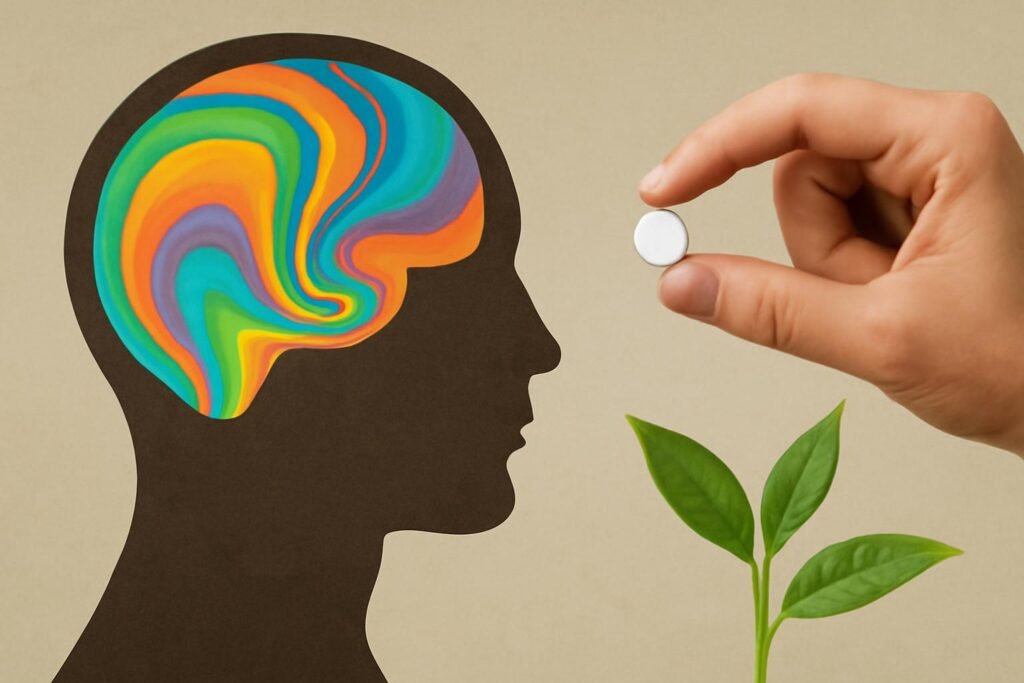
Psychedelics and habit change have become a major focus of neuroscience and mental-health research. Recent studies suggest that some psychedelic compounds may temporarily alter how the brain processes reward, uncertainty, learning, and repetitive behavior. That possibility is scientifically important—but it does not mean psychedelics are universally effective, risk-free, or legally available as consumer treatments.
For people following developments in DMT, 5-MeO-DMT, psilocybin, ketamine, and related compounds, the central question is not simply whether a psychedelic can produce an intense experience. The more useful question is whether a carefully supported experience can help someone recognize and change an unhealthy pattern over time.
This article explains what the emerging research may mean, what it cannot yet prove, and how U.S. readers can evaluate claims responsibly.
Why researchers are studying psychedelics and habit change
Many mental-health conditions involve patterns that become increasingly rigid. These may include compulsive substance use, rumination, avoidance, negative self-beliefs, or repetitive decision-making. Conventional treatments can help, but not every patient responds fully, and relapse remains a concern for some conditions.
Researchers are therefore investigating whether psychedelics can create a temporary period of increased psychological flexibility. In theory, this period may make it easier for a person to reconsider automatic responses and practice alternatives. The proposed mechanism is sometimes described as a window for learning, rather than a permanent reset of the brain.
Animal studies have reported changes in behavioral flexibility and reward-related learning after exposure to certain psychedelic compounds. Human research is also examining whether psychedelic-assisted therapy may support changes in depression, trauma symptoms, alcohol use, tobacco use, and other conditions. However, findings from animals, small clinical studies, and controlled therapy settings should not be treated as proof that unsupervised use will produce the same results.
What “breaking a habit” actually means
The phrase “break a habit” can sound more dramatic than the science supports. Habits are not single switches in the brain. They are learned patterns shaped by cues, rewards, emotions, environment, stress, sleep, and social reinforcement.
A person may understand that a behavior is harmful and still repeat it when exposed to a familiar trigger. For example, stress may activate an urge, a location may prompt an automatic routine, or loneliness may lead to a familiar coping behavior. A psychedelic experience may produce new insights, but insight alone does not guarantee lasting change.
Meaningful behavior change usually requires several elements:
- Recognizing the triggers that activate the pattern.
- Developing a realistic alternative response.
- Practicing the alternative repeatedly in everyday life.
- Addressing underlying mental-health or medical concerns.
- Building supportive relationships and a safer environment.
- Reviewing setbacks without treating them as total failure.
This is why researchers often emphasize preparation, professional support, and integration. The psychedelic session, where legally and clinically available, is only one part of a broader process.
What current research may suggest
Temporary changes in cognitive flexibility
Some early findings suggest that psychedelics may influence cognitive flexibility—the ability to consider new information, revise a belief, or shift away from a familiar response. This could be relevant to depression and addiction, where negative expectations or automatic reward-seeking can become deeply entrenched.
Yet flexibility is not always beneficial. A person who is emotionally overwhelmed or poorly supported may become more vulnerable to confusion, impulsive choices, or distress. Greater openness does not automatically equal better judgment. Context and guidance matter.
Changes in reward learning
Researchers are also exploring whether psychedelics affect how the brain responds to rewards and predictions. A substance-use habit, for instance, may be maintained when the expected reward repeatedly outweighs the perceived consequences. A therapeutic intervention could potentially help a person see that pattern differently.
These findings remain an active area of study. A laboratory measure of reward learning is not the same as long-term sobriety, improved relationships, or stable mental health. Strong claims should be supported by controlled human data with meaningful follow-up periods.
The role of meaning and personal interpretation
Psychedelic experiences can feel emotionally significant. Some participants report a renewed sense of purpose, connection, or self-compassion. These experiences may encourage healthier behavior, particularly when they are discussed and translated into practical goals afterward.
At the same time, a powerful experience can be interpreted in inaccurate or destabilizing ways. Feeling that an experience was profound does not prove that every belief formed during it is true. Responsible care leaves room for reflection, uncertainty, and professional evaluation.
Why animal studies should not be overinterpreted
News coverage often highlights studies in mice or other animals because they can reveal possible biological mechanisms. Researchers may observe changes in exploration, decision-making, social behavior, or responses to rewards. These results can justify further investigation.
They cannot establish that a human will experience improved judgment, reduced addiction risk, or lasting psychological growth. Animal models do not reproduce human language, culture, trauma history, expectations, personal meaning, or therapeutic relationships. Differences in dose, metabolism, route of administration, and experimental conditions also limit direct comparisons.
A responsible interpretation is: “This study identifies a mechanism worth testing.” An irresponsible interpretation is: “This proves that a psychedelic will improve human behavior.”
Safety concerns that headlines often omit
Psychedelic research takes place under screening and monitoring conditions that may not exist outside a study or licensed clinical program. Participants may be assessed for psychiatric history, cardiovascular risk, current medications, substance-use patterns, and personal support. Sessions may involve trained staff, controlled environments, emergency procedures, and structured follow-up.
Unsupervised use can involve very different risks. These may include panic, severe confusion, accidental injury, dangerous behavior, worsening of certain psychiatric symptoms, medication interactions, and unexpected exposure to an inaccurately labeled product. People with a personal or family history of psychosis or mania require particular caution and should speak with a qualified clinician before considering any psychedelic-related intervention.
DMT and 5-MeO-DMT can produce rapid and intense changes in perception and awareness. The short duration of some experiences does not make them harmless. A person can still become medically or psychologically distressed during the experience, especially when potency, identity, or contamination is uncertain.
For general educational information about effects, risks, and legal questions, readers can review the site’s DMT information hub. Educational material should not be treated as medical clearance or an invitation to use controlled substances.
Research, therapy, and retail claims are different categories
One of the most important distinctions in psychedelic education is the difference between research access, clinical care, state-regulated services, and retail marketing.
- Research access: Participation in an approved study under a specific protocol and eligibility criteria.
- Clinical care: Treatment provided within an authorized medical framework, where available.
- State-regulated services: Programs created under particular state laws, which may not be equivalent to FDA-approved treatment.
- Retail marketing: Commercial claims made to sell a product, often without clinical evidence or standardized oversight.
A study showing that a compound is being investigated does not authorize online sales. A state program does not automatically change federal law. A product page describing a substance as “therapeutic” does not establish that it has been proven safe or effective for a medical condition.
Consumers comparing categories, formats, or terminology can use the product index as a navigation reference, but product listings should never replace legal advice, medical screening, or independent verification of applicable regulations.
How to evaluate a new psychedelic research headline
When a study claims that psychedelics improve decision-making or reduce rigid behavior, ask several practical questions:
Was the study conducted in humans?
Human randomized controlled trials generally provide more relevant evidence than animal studies or laboratory experiments. Even then, sample size and participant selection matter.
What outcome was measured?
A change in a computer task, brain scan, or questionnaire may not translate into improved functioning at home or work. Look for outcomes that matter to patients, such as symptom severity, relapse rates, functioning, and quality of life.
How long were participants followed?
Immediate changes can be encouraging, but lasting benefits require follow-up. A study reporting improvement after one week cannot establish what happens after six months or a year.
Was therapy part of the intervention?
If participants received preparation, monitoring, and integration, the results apply to that complete model—not necessarily to taking a substance alone.
Were adverse events reported clearly?
Trustworthy research describes both benefits and harms. Be cautious when marketing highlights breakthrough stories while ignoring exclusions, dropouts, difficult experiences, or limitations.
Readers seeking broader educational material can also browse the site’s page index to locate related discussions. As with any online content, compare claims with qualified medical and legal guidance.
What this means for people considering DMT
Emerging research may eventually clarify whether particular psychedelic compounds can support specific therapeutic goals. It does not currently justify assuming that DMT is a treatment for addiction, depression, trauma, or compulsive behavior.
DMT is federally controlled in the United States, and laws can also vary by state and circumstance. Online claims about “legal” products, discreet shipping, therapeutic benefits, or guaranteed purity deserve careful scrutiny. Do not rely on a seller’s description to determine legality, identity, potency, or safety.
Anyone experiencing depression, substance-use problems, suicidal thoughts, mania, hallucinations, or severe anxiety should seek help from a licensed healthcare professional. In an immediate crisis in the United States, call or text 988 for the Suicide & Crisis Lifeline, or call emergency services when there is imminent danger.
Frequently asked questions
Can psychedelics permanently change a habit?
There is no reliable guarantee. Some research suggests that psychedelic-assisted interventions may support behavior change for certain people, but lasting outcomes depend on the substance, therapy model, diagnosis, support, and follow-up. A single experience should not be presented as a permanent cure.
Do psychedelics improve decision-making?
Early research is examining decision-making, cognitive flexibility, and reward learning. Results are mixed and context-dependent. A psychedelic may alter perception or openness without reliably improving judgment in every situation.
Is DMT approved as an addiction treatment in the United States?
DMT is not an FDA-approved addiction treatment. Research interest does not equal approval, and an investigational study does not create general permission to purchase or use DMT therapeutically.
Why is integration important?
Integration helps a person reflect on an experience and connect it with realistic behavioral goals. It may include therapy, journaling, relationship support, relapse-prevention planning, or medical follow-up. It cannot eliminate every risk, but it can provide structure after an intense experience.
The responsible takeaway
The most credible message from current psychedelic research is neither “psychedelics solve everything” nor “the research means nothing.” Instead, studies are identifying possible mechanisms that may help some people become more open to learning and change when interventions are carefully designed.
That possibility deserves rigorous investigation, transparent reporting, and patient-centered safeguards. Until stronger evidence and lawful care pathways are available, readers should separate promising science from sales language, treat intense experiences with respect, and seek qualified professional guidance rather than making health decisions based on a headline or product claim.
