
Psychedelics Education
DMT Forms Explained: How N,N-DMT, 5-MeO-DMT, Changa, and 4-AcO-DMT Differ
Nov
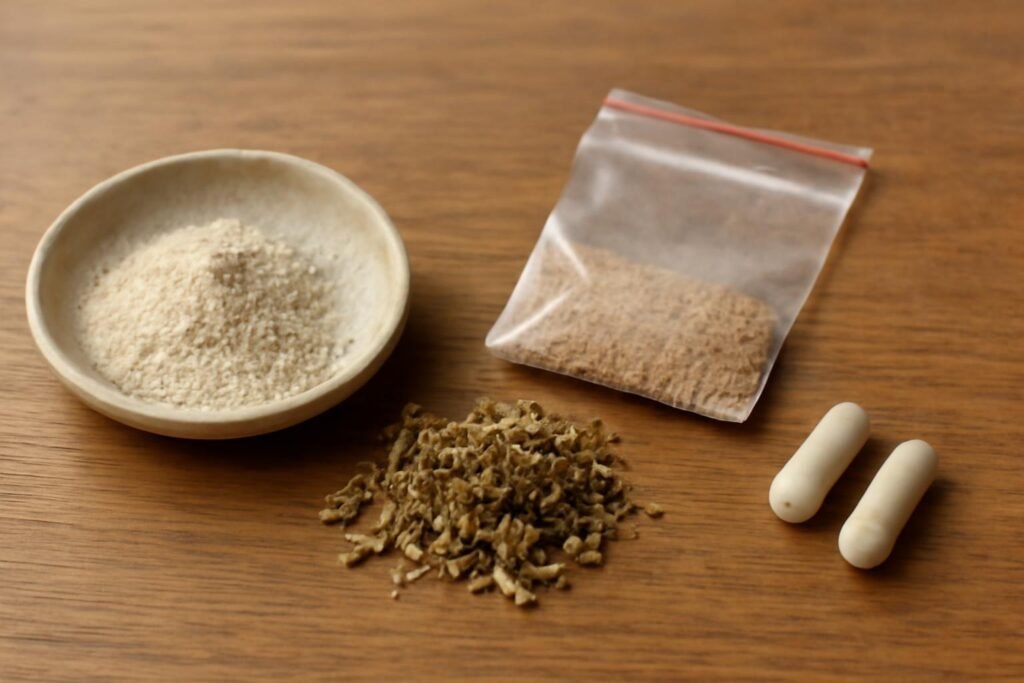
DMT forms explained: People often use “DMT” as a catch-all term for several distinct substances and preparations. That shorthand can create serious confusion. N,N-DMT, 5-MeO-DMT, changa, and 4-AcO-DMT are not interchangeable, even though their names are sometimes used together in online discussions.
The differences involve chemistry, intensity, duration, expected effects, interaction risks, and legal status. Packaging, color, a brand name, or a seller’s description cannot reliably identify what a substance contains. This guide is for education and risk awareness—not for purchasing, preparing, or using controlled substances.
For broader background, readers can review the educational material available through the DMT information hub. Always verify current laws and speak with a qualified healthcare professional before making decisions involving psychoactive substances.
Why “DMT” Can Mean Several Different Things
DMT is short for dimethyltryptamine, but the abbreviation is used loosely. In most conversations, “DMT” refers to N,N-dimethyltryptamine, often written as N,N-DMT or simply N,N. However, some people use the word to describe 5-MeO-DMT, ayahuasca preparations, enhanced leaf blends, or even unrelated research chemicals.
That ambiguity matters because two substances can produce dramatically different experiences and medical risks. A person who believes they are dealing with one compound may unknowingly receive another. Mislabeling is especially concerning when a product is sold in a cartridge, disposable device, powder, plant mixture, or brightly branded package.
Names are not proof of identity
Terms such as “pure,” “natural,” “breakthrough,” “toad,” “synthetic,” or “ceremonial” are not laboratory results. They are descriptions or marketing claims. A color such as yellow or orange may reflect impurities, plant material, oxidation, formulation, or contamination, but appearance alone cannot determine potency or safety.
Even a test kit has limitations. Reagent tests may indicate that a chemical family is present, but they generally cannot confirm exact concentration, identify every adulterant, or establish that a liquid is safe for inhalation. Laboratory analysis is more informative, but a result applies only to the specific submitted sample and does not guarantee that another portion is identical.
N,N-DMT: The Compound Most People Mean by “DMT”
N,N-DMT is a naturally occurring tryptamine that can also be produced synthetically. It is commonly associated with intense, short-acting psychedelic experiences when inhaled, although its effects can vary with the preparation, route, dose, individual physiology, and presence of other substances.
People may encounter N,N-DMT in several forms, including crystalline material, infused plant matter, or liquid products marketed for vaporization. These forms are not automatically equivalent. A liquid may contain solvents, thinning agents, flavorings, residual manufacturing chemicals, or a different psychoactive compound altogether.
Expected duration and intensity
Inhaled N,N-DMT is often described as having a rapid onset and a relatively brief primary experience compared with many other psychedelics. “Brief,” however, does not mean mild. The experience may involve major changes in perception, time awareness, body sensation, thought patterns, and emotional state.
Some people report fear, confusion, loss of orientation, or lingering emotional distress. A person can also become physically unsafe if they panic, fall, operate equipment, enter traffic, or combine the substance with alcohol, stimulants, opioids, antidepressants, or other psychoactive drugs.
5-MeO-DMT: A Different and Often More Physically Overwhelming Substance
5-MeO-DMT is chemically related to N,N-DMT but is not the same compound. It is sometimes called “five-meo,” “toad medicine,” or “toad venom,” although those terms can be misleading. 5-MeO-DMT may be produced synthetically or associated with certain animal-derived preparations, and the source does not establish purity or safety.
Compared with N,N-DMT, 5-MeO-DMT is often described as less visually elaborate and more associated with rapid changes in self-perception, bodily awareness, and consciousness. Reports vary widely, and the experience can be intensely disorienting or frightening.
Why 5-MeO-DMT requires particular caution
5-MeO-DMT may produce severe impairment, vomiting, loss of motor control, agitation, or apparent unresponsiveness. The risk becomes more complicated when it is combined with substances that affect serotonin or monoamine systems. Potentially dangerous combinations may include certain antidepressants, MAO inhibitors, stimulants, tramadol, some migraine medicines, and other psychedelics.
Anyone considering a legal, supervised research or therapeutic setting should receive a complete medical screening, disclose all medications and supplements, and ask how the service handles emergencies. A facilitator’s confidence, spiritual language, or positive testimonials is not a substitute for clinical safeguards.
Changa: A Preparation, Not a Separate DMT Molecule
Changa generally refers to a blend of plant material infused with DMT and sometimes combined with plants containing monoamine oxidase inhibitors, commonly called MAOIs. The exact composition can vary substantially from one preparation to another.
This is a crucial distinction: changa is not a standardized pharmaceutical product. One blend may contain little or no MAOI activity, while another may contain ingredients that significantly change how the body metabolizes certain substances. Strength, distribution of active material, moisture, plant identity, and storage conditions may also vary.
MAOI interactions and delayed risk
MAOIs can alter the breakdown of numerous drugs and chemicals. Combining an MAOI-containing preparation with serotonergic medicines, stimulants, certain pain medicines, or other psychoactive substances may increase the risk of dangerous reactions. The concern is not limited to what is taken at the same moment; some interactions can persist because enzyme activity remains affected for a period of time.
For this reason, it is unsafe to assume that changa carries the same profile as ordinary N,N-DMT. Anyone who takes prescription medication should consult a clinician or pharmacist rather than relying on internet combination charts or anecdotal reports.
4-AcO-DMT: A Research Chemical Often Confused With DMT
4-AcO-DMT, also known as psilacetin, is a distinct synthetic tryptamine. It is not N,N-DMT and is not 5-MeO-DMT. Online listings may describe it as a “legal shroom alternative” or use informal names that make it sound familiar, but those descriptions do not establish its identity, safety, or legal status.
Human research on 4-AcO-DMT is limited compared with established medicines. Its effects are often described as psychedelic and may resemble some aspects of psilocybin experiences, but individual reactions can differ substantially. The compound may also be mislabeled, substituted, or contaminated in unregulated markets.
Why 4-AcO-DMT products present special uncertainty
Research chemicals can be sold with incomplete instructions, inaccurate strength claims, or no reliable information about synthesis and contaminants. A product marketed as a vape, gummy, capsule, powder, or tablet may not contain the advertised substance. This is one reason that “buy 4-AcO-DMT,” “4-AcO-DMT sale,” and similar searches should be approached as safety and legal questions—not as evidence of a dependable supply chain.
Do not assume that a compound is safe because it is described as “legal,” “plant-based,” or “not scheduled.” Laws differ by jurisdiction and can change, while unregulated products may still create serious health risks.
Comparing the Main DMT-Related Terms
| Term | What it generally refers to | Key concern |
|---|---|---|
| N,N-DMT | A specific tryptamine often meant by the word DMT | Rapid, intense effects and uncertain product identity |
| 5-MeO-DMT | A different tryptamine with a distinct effect profile | Severe impairment, physical reactions, and medication interactions |
| Changa | A variable infused-plant preparation | Possible MAOI activity and unpredictable composition |
| 4-AcO-DMT | A separate synthetic research chemical | Limited human evidence, mislabeling, and changing legal status |
How to Read Claims About Purity, Testing, and Safety
Responsible evaluation starts with skepticism. A product page that lists a milligram amount, strain name, or “lab tested” badge may still leave important questions unanswered:
- Was the sample analyzed by an independent laboratory?
- Does the report identify the exact compound and quantify its concentration?
- Was the tested sample from the same batch and container?
- Does the analysis look for residual solvents, heavy metals, pesticides, and unexpected drugs?
- Is the report current, traceable, and understandable?
- Does the product contain a mixture that could alter metabolism or interaction risk?
Marketing language should never replace professional medical advice. Readers researching product categories can use the site’s product index for navigation, but an index or listing should not be interpreted as proof that a substance is legal, authentic, medically appropriate, or safe.
Legal Status in the United States
Federal and state laws do not treat all DMT-related substances identically, and legal status may depend on the exact compound, preparation, amount, location, and intended activity. N,N-DMT and 5-MeO-DMT are federally controlled substances in the United States. 4-AcO-DMT may be treated differently in some jurisdictions, but a different name does not guarantee legality.
Religious exemptions, research registrations, clinical studies, and state-level policy changes are narrow and fact-specific. They should not be confused with general permission to possess, manufacture, distribute, or order a substance online. Before taking action, consult a qualified attorney familiar with the law where you live.
For additional educational reading, the site’s article index provides access to related discussions about DMT terminology, law, and risk. Information published online should be checked against current government and medical guidance because both science and policy can change.
What to Do If Someone Has a Medical Emergency
Call emergency services immediately if someone has trouble breathing, chest pain, a seizure, dangerously high body temperature, severe agitation, repeated vomiting, collapse, uncontrolled movements, or cannot be awakened. Do not leave the person alone, force them to drink, or attempt to make them vomit.
Tell responders what may have been taken, when it was taken, and whether alcohol, prescription medicines, or other substances were involved. Honest information helps clinicians choose safer treatment. If the person is unconscious but breathing, place them on their side and monitor their breathing while waiting for help.
Frequently Asked Questions
Is 5-MeO-DMT the same as DMT?
No. 5-MeO-DMT and N,N-DMT are different compounds with different effects and risks. Treating them as interchangeable can lead to dangerous assumptions about potency, duration, and interactions.
Is changa just smoked DMT?
Changa is usually an infused plant preparation, but its ingredients and strength vary. Some preparations may contain MAOI-active plants, which can create additional interaction risks.
Is 4-AcO-DMT a form of DMT?
It is a distinct synthetic tryptamine, not N,N-DMT or 5-MeO-DMT. Limited research and unreliable labeling make online claims about its safety difficult to evaluate.
Can a home drug test identify every DMT form?
No. Standard workplace drug panels often do not include DMT-related compounds, but specialized testing may be available. A negative result does not prove that a substance was safe or accurately labeled.
What is the safest way to buy DMT online?
There is no general legal online retail pathway for controlled DMT in the United States. Avoid illegal purchasing instructions and do not assume that a website, review, payment option, or shipping promise proves legitimacy. The safer approach is to seek lawful education, qualified medical guidance, and legitimate research or clinical pathways where available.
Bottom Line
The phrase “DMT forms explained” covers an important distinction: N,N-DMT, 5-MeO-DMT, changa, and 4-AcO-DMT are different substances or preparations, not interchangeable product names. Their chemistry, intensity, duration, interaction risks, evidence base, and legal treatment can differ substantially.
When evaluating claims, prioritize verified identity, independent testing, medical screening, emergency planning, and current legal information. Avoid relying on color, branding, testimonials, or promises of purity. In psychedelic education, precision is not merely academic—it is a core part of safety.
