
Psychedelics Education
Counterfeit DMT and 5-MeO-DMT Vapes: A 2026 Safety Guide for U.S. Consumers
Nov
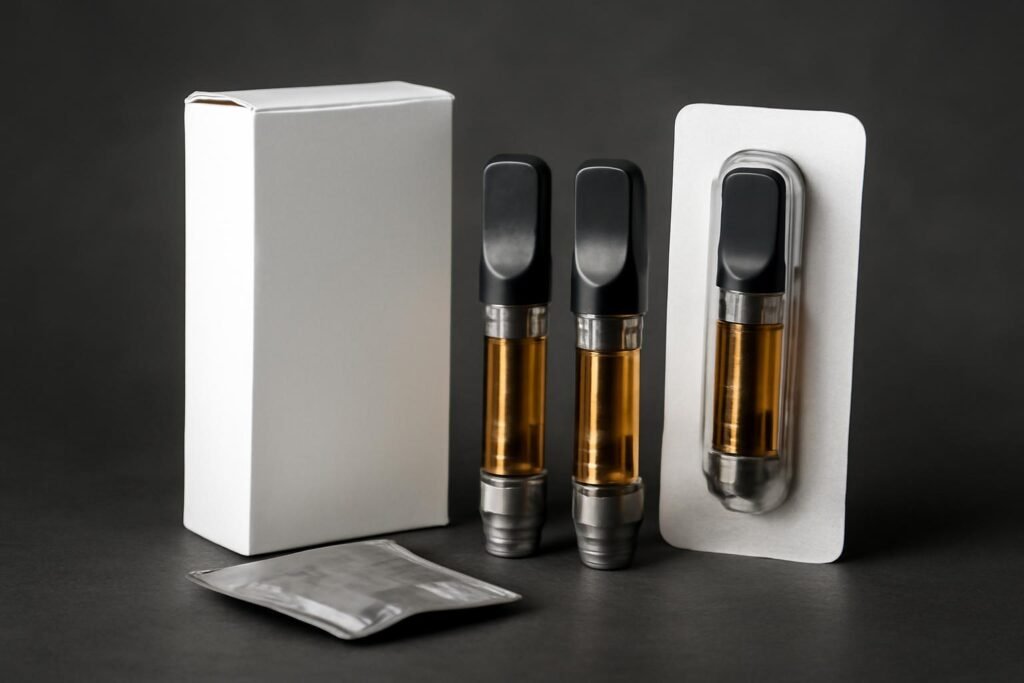
Recent psychedelic-industry coverage and online safety alerts have drawn attention to a serious consumer problem: counterfeit or misrepresented DMT and 5-MeO-DMT vape products. Listings may use familiar brand names, polished packaging, laboratory-style language, or claims such as “pure,” “natural,” or “tested.” None of those statements, by themselves, prove what is inside a cartridge or disposable device.
For people researching counterfeit DMT vapes, the most important principle is simple: appearance and advertising are not evidence of identity, concentration, sterility, or safety. A product sold online may contain a different compound, an inaccurate concentration, residual solvents, contaminants, or no active ingredient at all. Because DMT and 5-MeO-DMT can produce intense and rapid effects, uncertainty about contents creates an especially high-risk situation.
This article is educational and focused on risk recognition. It does not provide instructions for obtaining, preparing, or using controlled substances. Laws differ by state and may change, so readers should consult qualified legal and medical professionals before making decisions.
Why counterfeit psychedelic vapes are difficult to identify
Unlike regulated medicines, illicit or unauthorized vape products generally do not pass through a consistent manufacturing, labeling, and quality-control system. A package can be copied easily, while a batch number or QR code can be fabricated. Even a genuine-looking label does not establish that the liquid inside matches the label.
There are several reasons visual inspection is inadequate:
- Packaging can be reused or imitated. Logos, fonts, holograms, and warning labels are easy to reproduce.
- Brand names may be misused. A name appearing on a cartridge does not prove authorization or a connection to a legitimate manufacturer.
- Concentration claims may be unreliable. A stated milligram amount may refer to the liquid, the entire device, or an unverified estimate.
- Color is not a purity test. Clear, yellow, orange, or dark liquid can result from different chemicals, degradation, contaminants, or formulation choices.
- Online testimonials are not laboratory evidence. Reviews may be incomplete, incentivized, copied, or based only on subjective effects.
Consumers should therefore treat an unverified DMT cart or disposable as an unknown mixture rather than assuming the advertised identity is correct.
Why DMT and 5-MeO-DMT misrepresentation matters
DMT and 5-MeO-DMT are distinct substances with different pharmacological profiles. Confusing one for the other can produce an experience that is substantially different from what a person expected. A product advertised as one compound could also contain another psychedelic, a stimulant, a dissociative, a synthetic cannabinoid, or an inactive carrier liquid.
Unexpected contents can change the duration, intensity, onset, cardiovascular strain, psychological effects, and interaction risks. A person who believes a device contains a familiar substance may make decisions based on false assumptions about timing or potency. This is one reason counterfeit claims are not merely a branding issue; they are a public-health concern.
Vape devices also introduce hardware-related uncertainty. Heating coils, batteries, solvents, and additives may affect exposure. A leaking, overheating, damaged, or modified device can create risks independent of the drug itself. No online product description can reliably rule out these hazards.
Warning signs associated with counterfeit DMT vapes
No single warning sign proves that a product is counterfeit. However, several concerns appearing together should be treated as a reason not to rely on the product’s claims.
Pressure to buy quickly
Urgency tactics such as “last batch,” countdown discounts, private-message ordering, or promises of guaranteed discreet delivery are common in unregulated markets. Pressure discourages careful verification and can make scams more successful.
Unsupported laboratory claims
A certificate of analysis should identify the tested sample, date, laboratory, method, analytes, and result. A screenshot containing only the words “lab tested” or “99% pure” is not meaningful proof. Even a real report may apply to a different batch than the device being offered.
Vague or contradictory labeling
Be cautious when a listing uses DMT, 5-MeO-DMT, “toad venom,” “research blend,” and other terms interchangeably. These terms are not synonyms. Contradictory ingredient descriptions, missing concentration units, absent batch information, or unexplained formulation changes are important red flags.
Unverifiable business information
Anonymous sellers, constantly changing domains, cryptocurrency-only payment demands, and refusal to provide basic business information increase the possibility of fraud. A polished website is not proof of lawful operation or product quality.
Claims that ignore legal and medical risk
Statements such as “risk-free,” “non-addictive for everyone,” “safe for all users,” or “legal nationwide” should be treated skeptically. Controlled-substance laws vary, and an online seller cannot eliminate medical contraindications or legal exposure through marketing language.
What drug checking can and cannot tell you
Drug-checking services and reagent tests may reduce uncertainty in some situations, but they do not transform an unknown vape into a verified or safe product. Reagents can produce false positives, false negatives, or ambiguous color changes. Many tests are not designed to identify every compound or quantify potency. They may also fail to detect contaminants, microbial contamination, heavy metals, or degradation products.
Laboratory analysis is more informative than a home test, but its value depends on representative sampling and reliable chain of custody. Testing one portion of a liquid does not guarantee that every portion of a cartridge is identical. A report for one batch cannot automatically validate another batch.
For these reasons, a test result should be interpreted as limited information, not a guarantee of safety. People who are unsure about a product’s identity should avoid treating uncertain results as permission to use it.
Health risks after suspected exposure
Effects after inhaling an unknown vape can vary widely. Possible concerns include panic, confusion, agitation, loss of coordination, vomiting, chest pain, rapid or irregular heartbeat, breathing difficulty, seizures, overheating, or loss of consciousness. Psychological distress can be severe even when the exposure is not medically life-threatening.
Risk may be higher for people with cardiovascular conditions, seizure disorders, a history of psychosis or mania, serious anxiety disorders, pregnancy, or current use of medications that affect serotonin, blood pressure, heart rhythm, or central nervous system activity. Combining an unknown vape with alcohol, stimulants, opioids, antidepressants, monoamine oxidase inhibitors, or other psychoactive substances can make outcomes harder to predict.
Do not assume that a short-acting experience is automatically safe. A person may become impaired, vomit, fall, panic, or behave unpredictably during a brief period of intense effects. A trusted sober adult should prioritize physical safety and avoid leaving an impaired person alone.
When to seek emergency help
Call 911 immediately for trouble breathing, blue or gray lips, chest pain, severe agitation, seizure, collapse, extreme overheating, unresponsiveness, or behavior that creates an immediate danger. Do not wait for symptoms to “wear off” when a person is unconscious, struggling to breathe, or experiencing a medical emergency.
If the person is unconscious but breathing, place them on their side if it is safe to do so and monitor their breathing. Do not force food, drinks, or additional substances. Do not induce vomiting. Tell emergency responders what was reportedly used, when it was used, and whether other substances or medications may be involved. Honest information helps clinicians choose safer treatment.
For uncertain poison exposures in the United States, contact Poison Control at 1-800-222-1222. In an immediate emergency, call 911 first.
How to evaluate online claims without being misled
Search results for “DMT pen for sale,” “5-MeO-DMT vape,” or similar terms can mix educational information, scams, unauthorized sellers, and misleading advertisements. A strong evaluation process begins by separating three questions:
- What is the legal status? Determine the federal and state rules that apply where you live. A seller’s statement is not a substitute for legal advice.
- What is the evidence of identity? Look for independent, batch-specific analytical information rather than marketing claims.
- What is the medical risk? Consider health history, medications, possible interactions, and whether emergency support would be available.
Readers can review the site’s main educational hub for general information, but should remember that website content and product descriptions cannot verify an unknown substance or replace professional medical and legal guidance.
For additional background, the site’s published article index and general page index may help readers locate related educational material. Always check publication dates because psychedelic laws, research findings, and public-health guidance can change.
What responsible reporting should include
When discussing a suspected counterfeit vape, avoid reposting sales links, seller contact details, or attractive product images that could promote distribution. Instead, document the packaging privately, preserve the remaining device if authorities or clinicians request it, and record the time and circumstances of exposure.
Useful details include the advertised name, stated ingredients, batch number, purchase date, symptoms, and any other substances taken. Do not handle leaking liquid unnecessarily, and keep unknown products away from children and pets.
Frequently asked questions
Can a QR code prove that a DMT vape is authentic?
No. A QR code can lead to a genuine report, a copied document, a generic webpage, or a fabricated result. Authenticity requires more than scanning a code; the report must be independently credible and clearly tied to the exact sample or batch.
Does clear liquid mean a vape is pure?
No. Appearance cannot establish identity, concentration, sterility, or the absence of contaminants. Clear liquid can still contain an unexpected or hazardous substance.
Are 5-MeO-DMT and N,N-DMT the same?
No. They are different compounds with different effects and risks. Product descriptions that treat them as interchangeable should be considered unreliable.
Can a home drug test identify everything in a vape?
No. Most home tests cover limited substances and may not detect novel compounds, mixtures, contaminants, or potency. A negative result does not prove that a vape is safe.
What should I do if I suspect a counterfeit product caused symptoms?
For severe symptoms, call 911. For uncertain exposures without immediate life-threatening symptoms, contact Poison Control at 1-800-222-1222 in the United States. Keep the packaging available and provide accurate information to medical professionals.
The safest conclusion about counterfeit DMT vapes
In an unregulated market, the central risk is not only that a product may be weak or expensive. It may contain a different substance, an unpredictable concentration, or contaminants that cannot be identified from packaging alone. Counterfeit DMT vapes and misrepresented 5-MeO-DMT devices therefore deserve a high level of caution.
Consumers should question extraordinary claims, avoid pressure-based decisions, understand the limits of drug checking, and seek professional help when exposure produces dangerous symptoms. Education cannot make an unknown vape safe, but it can help people recognize uncertainty before it becomes an emergency.
