
Psychedelics Education
Psychoactive Product Labeling: How to Read Ingredients, Potency, and Testing Claims
Nov
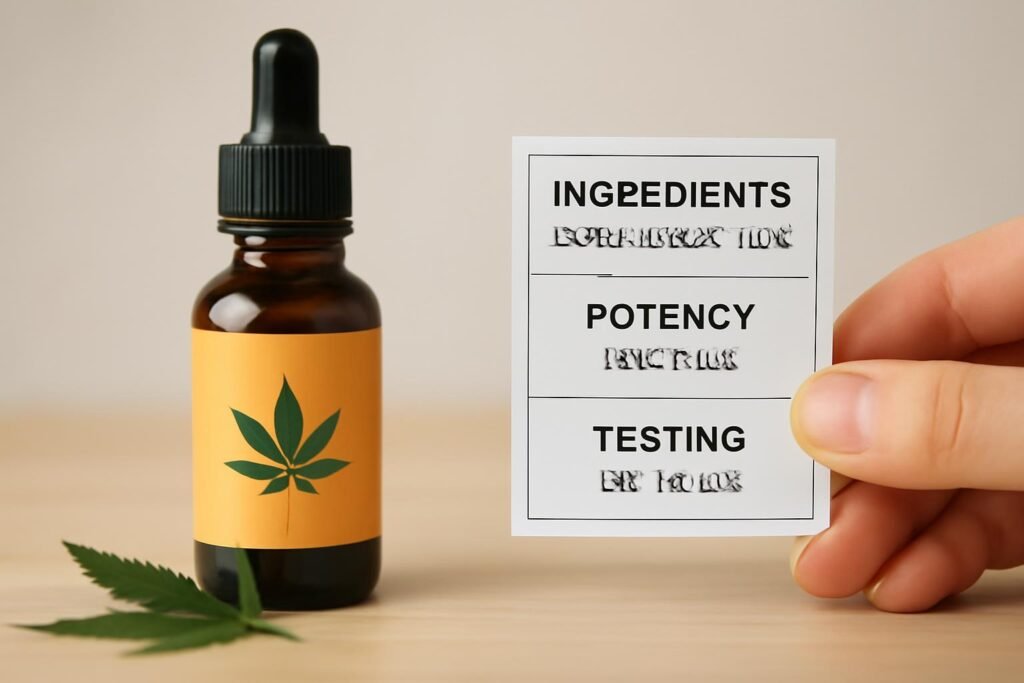
Labels on psychoactive products often use scientific language, laboratory imagery, and precise-looking numbers. Those details can create an impression of quality, but appearance is not proof of identity, purity, potency, or legal status. A responsible review requires looking beyond the front of a package.
This matters especially for products marketed as DMT, 5-MeO-DMT, 4-AcO-DMT, changa, vape cartridges, disposable pens, gummies, or “research” compounds. In the United States, many substances remain federally controlled, and a website listing or product label does not create a legal retail pathway. Readers should treat online claims cautiously and avoid assuming that a product is legal, authentic, or safe because it is available for purchase.
This guide presents a practical framework for interpreting psychoactive product labeling. It is educational information, not medical advice and not an endorsement of purchasing, possessing, manufacturing, or using controlled substances.
Why a professional-looking label is not enough
Unregulated products may copy the design language of legitimate supplements, pharmaceuticals, or laboratory materials. A label may include a batch number, a purity percentage, a QR code, or the phrase “lab tested.” None of those features independently verifies the contents.
A trustworthy evaluation asks several separate questions:
- Does the label clearly identify the active substance?
- Is the amount stated as total content, concentration, or an estimate?
- Can the testing claim be independently verified?
- Does the test cover identity and contaminants, or only one narrow measurement?
- Is the product legally permitted in the buyer’s jurisdiction?
- Could the packaging or hardware introduce additional risks?
If a seller cannot answer these questions with specific documentation, the safest conclusion is uncertainty. Uncertainty is not the same as purity.
Start with the complete ingredient list
The first step in reviewing a label is identifying every claimed ingredient. A product that simply says “DMT vape,” “psychedelic blend,” or “botanical extract” does not provide enough information to evaluate its contents.
Look for exact chemical names
Different compounds can have very different effects, durations, interactions, and legal classifications. N,N-DMT is not the same substance as 5-MeO-DMT, and neither should be treated as interchangeable with 4-AcO-DMT or an herbal mixture such as changa. Brand names, strain names, and marketing terms cannot substitute for an exact chemical identity.
Be cautious when a label uses broad phrases such as “tryptamine blend,” “toad-inspired,” “plant medicine,” or “natural psychedelic.” These descriptions may conceal multiple ingredients or avoid stating what is actually present.
Check for inactive ingredients and solvents
For cartridges, pens, liquids, and edibles, the carrier ingredients matter. Possible components may include solvents, flavorings, thinning agents, oils, sweeteners, or other additives. A label that identifies only the headline compound but omits the carrier is incomplete.
“Natural” does not automatically mean harmless. Plant-derived material can contain active compounds, contaminants, pesticides, heavy metals, or microbes. Likewise, a synthetic compound is not automatically unsafe merely because it is synthetic; the important issue is verified identity, manufacturing quality, and appropriate oversight.
Understand what potency numbers actually mean
Potency claims are frequently presented in ways that sound precise but remain difficult to interpret. A number such as “800 mg,” “150 mg,” or “99% pure” may refer to different things depending on the product format.
Ask whether the number describes:
- the total amount in the entire package;
- the amount per milliliter of liquid;
- the amount per serving;
- the estimated amount added during manufacturing; or
- the result of a laboratory measurement.
These are not equivalent. A cartridge labeled with a total amount does not necessarily deliver a consistent amount in every inhalation. A powder labeled by weight does not prove that all of the material is the named compound. A percentage without a test method, sample identification, and date is difficult to verify.
Consistency matters as much as concentration
Even when a product contains the claimed substance, uneven mixing can create concentration differences within the same container. This concern is particularly relevant to liquids, infused plant material, and multi-component products. A single test result from one sample may not establish uniformity throughout an entire production run.
Consumers should also be skeptical of claims that imply predictable experiences, such as “guaranteed breakthrough,” “precise effects,” or “zero-risk microdosing.” Psychoactive responses vary between people and can be affected by health conditions, medications, sleep, stress, and co-use with other substances.
How to evaluate a certificate of analysis
A certificate of analysis, or COA, is useful only when it is complete and connected to the product being discussed. A logo that says “independently tested” is not the same as a verifiable laboratory report.
Key details a meaningful COA should include
- The laboratory’s legal name and contact information;
- the sample identification or batch number;
- the date the sample was received and tested;
- the exact product or material tested;
- the analytical methods used;
- identity and potency results;
- results for relevant contaminants; and
- clear pass, fail, or quantitative findings.
A document that shows only a purity percentage may not test for pesticides, heavy metals, residual solvents, microbial contamination, or unexpected psychoactive compounds. A report can also be genuine while applying to a different batch than the one being advertised.
Watch for common documentation problems
Several warning signs should prompt caution:
- The QR code leads only to a seller-controlled marketing page.
- The report has no laboratory address or identifiable analyst.
- The batch number on the report does not match the package.
- The date is old, missing, or unrelated to the current product.
- The document uses vague terms such as “safe,” “clean,” or “medical grade” without test results.
- The report tests a raw ingredient while the product contains additional processing materials.
- Every product from a large catalog appears to have identical results.
Testing cannot make an illegal product legal, and it cannot guarantee that use will be medically appropriate. It is one piece of information, not a safety certificate.
Packaging and hardware deserve separate scrutiny
For vape cartridges and disposable pens, the container and heating hardware introduce questions that a chemical report may not answer. Materials used in the cartridge, seals, metals, adhesives, and heating elements can affect the contents, especially when exposed to heat.
Labels should identify the manufacturer or responsible party, lot information, net contents, and storage guidance. Missing contact details, spelling errors, inconsistent branding, damaged seals, and unexplained changes in color or texture are reasons not to rely on the product.
Do not assume that a familiar brand name proves authenticity. Counterfeit packaging can imitate logos, fonts, QR codes, and product photographs. A seller’s claim that an item is “discreet,” “premium,” or “deadhead” does not establish provenance.
Separate legal claims from marketing language
“For research only,” “not for human consumption,” and “botanical” are marketing or regulatory statements, not guarantees of lawful possession or personal safety. The legal status of a substance can depend on federal law, state law, analog provisions, religious-use claims, location, quantity, and the specific facts of a case.
Readers researching DMT information in the United States should distinguish between an online listing and an authorized medical, scientific, or regulated access pathway. A product appearing in a search result does not mean it has FDA approval, has passed a government review, or may be lawfully shipped to a particular state.
For broader educational browsing, the site’s available information pages and published educational posts may provide context, but readers should still verify current law through qualified legal or public-health professionals.
Health considerations labels cannot replace
A label cannot determine whether a psychoactive substance is appropriate for a particular person. Anyone considering a psychedelic or other psychoactive compound should discuss relevant risks with a qualified clinician, especially when there is a history of psychosis, mania, severe anxiety, cardiovascular disease, seizures, pregnancy, or serious medication interactions.
Combining psychoactive substances increases uncertainty. Alcohol, stimulants, opioids, sedatives, antidepressants, migraine medicines, and other compounds may change effects or risks. People should not drive, swim, climb, use machinery, or remain alone while impaired.
Severe confusion, chest pain, seizures, loss of consciousness, dangerous agitation, breathing problems, or suicidal thoughts require urgent medical attention. In the United States, call emergency services for an immediate emergency. Poison Control can be reached at 1-800-222-1222.
A practical label-review checklist
Before treating any psychoactive product as identifiable or tested, confirm the following:
- The exact active ingredient is stated clearly.
- The label explains whether amounts are per serving, per container, or concentration-based.
- All additional ingredients are disclosed.
- The batch or lot number matches the testing documentation.
- The COA identifies a real laboratory and test methods.
- The report includes identity, potency, and relevant contaminant screening.
- The package identifies a responsible manufacturer or distributor.
- The product is not relying on vague “natural,” “legal high,” or “research” language.
- No claims promise guaranteed effects or zero risk.
- The product’s legal status has been verified independently.
If several items are missing, do not fill the gaps with assumptions. The absence of information is itself an important risk signal.
Frequently asked questions
Does a QR code prove that a psychoactive product was tested?
No. A QR code may lead to a genuine laboratory report, a seller-created page, or unrelated marketing content. Check the laboratory identity, batch number, date, methods, and results rather than relying on the code alone.
Is a high purity percentage a guarantee of safety?
No. Purity does not address dose consistency, contaminants, mislabeling, interactions, individual health conditions, or legal status. It also has little value if the laboratory report cannot be connected to the specific batch.
Are natural DMT products safer than synthetic products?
Not automatically. Natural materials may contain variable concentrations and contaminants, while synthetic products may be misidentified or improperly manufactured. Safety depends on verified identity, quality controls, context, and the individual—not simply on whether a product is natural.
Can a “research chemical” label make a product legal?
No. That phrase does not override federal or state controlled-substance laws. It also indicates that the product may not have been evaluated for human use.
What should I do if a label seems inaccurate?
Do not rely on the product. Preserve the packaging if safe to do so, avoid consuming or sharing it, and contact a poison-information service or healthcare professional if exposure has occurred. Report suspected counterfeit or dangerous products to the appropriate consumer-protection or public-health agency.
The bottom line
Good psychoactive product labeling should make identity, contents, batch information, testing, and responsible parties easier to verify—not harder. Still, even a detailed label cannot transform an unregulated product into an approved medicine or establish that possession is lawful.
The most reliable approach is to treat marketing claims as unverified until supported by specific, current, independently attributable information. When identity, potency, or legal status remains uncertain, the safest decision is to stop and seek qualified medical, legal, or public-health guidance.
