
Psychedelics Education
Do Psychedelics Permanently Change the Brain? How to Read New Research Without Overclaiming
Nov
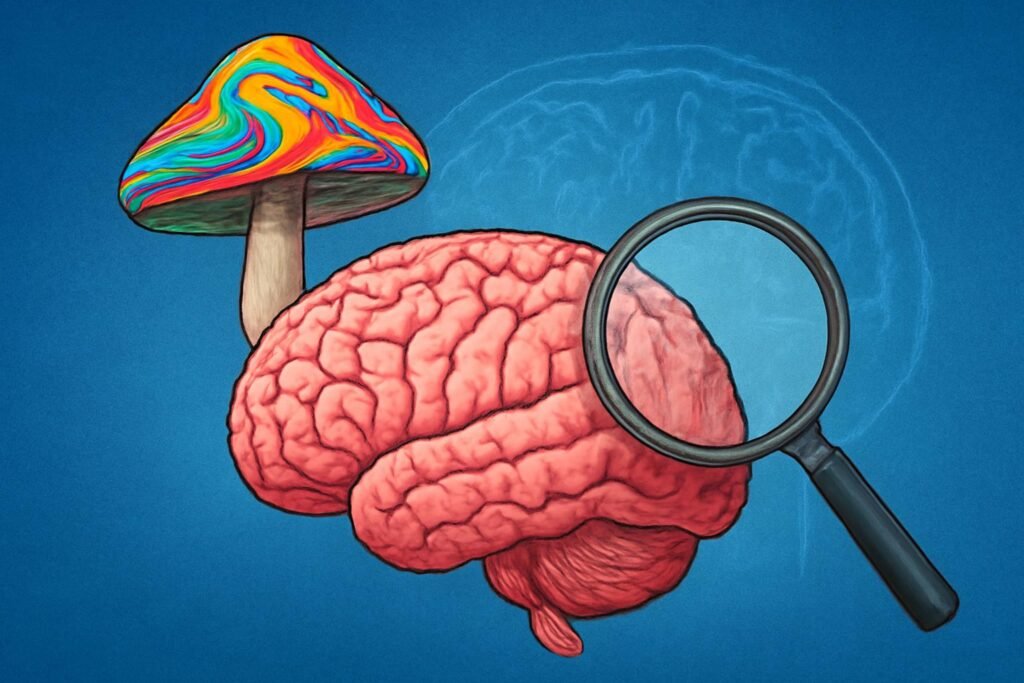
Headlines about psychedelics and lasting brain changes are becoming increasingly common. Some reports describe altered neural connections, improved flexibility in animal models, or brain activity that remains different after the acute effects have ended. Other stories warn that psychedelics may leave a permanent mark on the brain.
Both interpretations can be misleading when removed from context. A measurable change in brain activity is not automatically harmful, and a biological change is not proof of a lasting mental-health benefit. The most responsible conclusion is that psychedelic compounds can produce meaningful short-term effects on perception, emotion, and brain signaling, while the long-term significance of those changes remains an active area of research.
This guide explains how to read the emerging evidence without turning preliminary findings into medical promises. It also outlines practical questions about risk, legal status, clinical supervision, and why product claims should be treated cautiously.
This article is for general education, not medical or legal advice. DMT, 5-MeO-DMT, and many related substances are controlled or otherwise restricted in the United States. Do not use this information as instructions for obtaining, preparing, dosing, or consuming controlled substances.
What researchers mean by “lasting brain changes”
The phrase “lasting brain changes” can refer to several different findings. These categories should not be treated as interchangeable.
Changes in brain activity
Functional imaging studies may show that communication between brain regions changes during or after a psychedelic experience. Researchers may observe altered connectivity, shifts in network activity, or changes in how the brain responds to emotional information.
These findings can last beyond the period of obvious intoxication, but a change in activity does not necessarily mean the brain has been damaged or permanently rewired. Brain networks naturally adapt to sleep, stress, learning, medication, illness, and major emotional experiences.
Changes in neural connections
Laboratory research, particularly in cell cultures and animals, has examined processes sometimes associated with neuroplasticity. These include the growth or strengthening of connections between nerve cells. Such findings are scientifically interesting because they may help explain how certain compounds affect learning, mood, or behavior.
However, a change observed in a mouse, a cultured neuron, or a laboratory model cannot be directly translated into a guaranteed result in a person. Human brains, environments, expectations, and medical histories are considerably more complex.
Changes in reported behavior or mood
Clinical studies may report improvements in symptoms, emotional processing, or behavioral flexibility after a psychedelic-assisted intervention. These outcomes are important, but they can be influenced by therapy, preparation, social support, expectancy, and the structure of the study itself.
A reported benefit is not the same as proof that a compound permanently improves the brain. Researchers must examine how long an effect lasts, whether it applies to different populations, and whether there are delayed adverse effects.
Why recent psychedelic headlines require careful reading
News coverage often compresses a complicated study into a simple claim. A headline may say that psychedelics “rewire the brain,” “break rigid habits,” or “leave a lasting mark.” The original research may have involved a small sample, an animal model, a single brain-imaging session, or a laboratory measure that does not have a clear clinical meaning yet.
Before accepting a claim, ask five questions:
- Who or what was studied? Human participants, animals, isolated cells, and computer models provide different levels of evidence.
- How large was the study? Small studies can identify promising signals but may not reliably predict outcomes for the broader population.
- Was there a comparison group? Without a control or placebo condition, it is difficult to separate drug effects from expectancy and context.
- How long were participants followed? A result measured days after a session does not establish a permanent effect.
- Was the outcome clinically meaningful? A change in a brain scan may not translate into improved functioning, safety, or quality of life.
This approach is especially important when evaluating online claims about DMT, 5-MeO-DMT, 4-AcO-DMT, changa, cartridges, pens, or other products marketed with therapeutic language.
Neuroplasticity is not automatically good or bad
Neuroplasticity describes the brain’s ability to change in response to experience. It is a neutral term, not a synonym for healing. Learning a skill, adapting to stress, developing a habit, and recovering from injury can all involve plasticity.
That means claims such as “this product increases neuroplasticity” are incomplete. The more important questions are: what changes, in whom, under what conditions, and with what consequences?
A controlled clinical intervention may use preparation, supervision, psychological screening, integration, and follow-up to support a specific therapeutic goal. An unknown or mislabeled product used without medical oversight is a very different situation. The same broad biological mechanism can have different outcomes depending on dose, purity, interactions, mental-health history, setting, and support.
What the evidence can currently support
Current research supports several cautious conclusions:
- Psychedelic experiences can produce intense and measurable changes in perception, emotion, attention, and self-processing.
- Some studies suggest that effects on brain networks or emotional processing may continue after acute effects have ended.
- Animal and laboratory research provides useful clues about mechanisms such as receptor signaling and plasticity.
- Early clinical findings may justify further research into specific mental-health applications.
- Research does not establish that psychedelics are universally safe, permanently beneficial, or appropriate for every person.
It is also important to distinguish a pure research compound administered in a controlled study from a retail product obtained through an informal or unverified channel. Label accuracy, concentration, contamination, adulteration, and storage conditions may be uncertain outside regulated research.
Readers interested in foundational information should review the educational material in the site’s DMT overview and compare it with independent medical guidance before making health decisions.
Potential risks that long-term headlines may overlook
Public discussion often focuses on whether psychedelics create positive brain changes. A complete risk assessment must also consider psychological, physical, and social outcomes.
Psychological reactions
Intense fear, panic, confusion, paranoia, or emotional distress can occur during a psychedelic experience. Some people may experience lingering anxiety, insomnia, perceptual disturbances, or difficulty integrating what happened. Anyone with a personal or family history of psychotic disorders, mania, or certain severe psychiatric conditions should seek professional advice before considering any psychedelic exposure.
Medication and health interactions
Psychedelics may interact with psychiatric medications, stimulants, serotonergic drugs, alcohol, or other substances. Cardiovascular conditions, seizure disorders, pregnancy, and other medical factors may also affect risk. A qualified clinician is the appropriate person to evaluate individual contraindications.
Unknown product composition
Packaging, branding, or a claimed milligram amount cannot prove identity or purity. A drug test kit may provide limited information, but it cannot guarantee accurate concentration, identify every contaminant, or establish that a product is safe. Testing is not a substitute for regulated manufacturing or medical oversight.
For a broader discussion of adverse effects and risk factors, readers can consult the site’s DMT risks guide. In an emergency involving severe agitation, chest pain, seizures, loss of consciousness, extreme overheating, or dangerous behavior, contact emergency services immediately.
Why context may matter as much as chemistry
In psychedelic research, “set and setting” refers broadly to a person’s mindset and the surrounding environment. Modern clinical studies may include preparation meetings, trained facilitators, carefully selected participants, a controlled setting, and integration sessions afterward.
These elements do not make a psychedelic intervention risk-free, but they can help researchers understand what the compound contributes and what the therapeutic environment contributes. Without that structure, it becomes difficult to know whether a reported outcome came from the substance, the person’s expectations, the social setting, a meaningful life event, or a combination of factors.
This is one reason consumers should be skeptical of statements that a particular vape, retreat, or product will “reset” the brain or deliver guaranteed emotional healing. Such language usually exceeds the available evidence.
How legal status affects interpretation and access
In the United States, legal status varies by substance, state, setting, and activity. Federal restrictions remain significant for DMT and several related compounds. A state initiative, decriminalization policy, research authorization, or supervised service model does not automatically create a general retail market.
Likewise, a website listing a product does not prove that the product is legally sold, medically approved, accurately labeled, or lawful to ship to a particular state. Consumers should verify current rules through official state and federal resources and avoid relying on marketing language such as “legal,” “natural,” “lab tested,” or “therapeutic” without documentation.
The site’s DMT legal information provides general background, but laws can change and personal legal advice should come from a licensed attorney familiar with the relevant jurisdiction.
A practical framework for evaluating new research
When a new study or news story appears, use this four-step framework:
- Read beyond the headline. Identify the actual compound, population, setting, follow-up period, and measured outcome.
- Separate association from causation. A brain difference observed after psychedelic use does not automatically prove that the substance caused it or that it is beneficial.
- Look for replication. Strong conclusions become more credible when independent research teams obtain similar results.
- Check whether claims are being commercialized. Be cautious when a preliminary finding is immediately used to sell a product, retreat, cartridge, supplement, or coaching package.
Consumers can also review the site’s general FAQ page for common terminology, while remembering that educational website content should not replace evaluation by a physician, psychologist, pharmacist, or attorney.
Frequently asked questions
Can psychedelics permanently change the brain?
They may produce biological and psychological effects that last beyond the acute experience, but current evidence does not support a simple answer that all psychedelics permanently rewire the brain. Duration and significance depend on the compound, dose, person, context, and outcome being measured.
Does a lasting brain change mean brain damage?
No. “Change” is not the same as “damage.” Some changes may reflect adaptation or learning, while others could be unwanted. Researchers need long-term clinical and safety data before assigning a positive or negative meaning to a finding.
Do brain-scan findings prove therapeutic benefit?
No. Imaging can help researchers understand mechanisms, but a scan does not prove that someone is healthier, safer, or less symptomatic. Therapeutic benefit requires validated clinical outcomes and appropriate follow-up.
Are natural or plant-derived psychedelics safer?
Not necessarily. Natural origin does not guarantee predictable potency, purity, legality, or compatibility with medications and health conditions. Risk depends on the specific substance and circumstances, not only its source.
The responsible takeaway
Research into psychedelics and lasting brain changes is developing quickly, and some findings are genuinely promising. But promising is not the same as proven. A responsible interpretation recognizes both possibilities: psychedelic compounds may influence brain systems involved in perception, emotion, and learning, while unregulated use can involve serious and unpredictable risks.
Until stronger evidence and lawful, regulated access pathways become available, consumers should treat extraordinary claims with caution. Avoid assuming that a product is safe because it is advertised online, and seek qualified medical and legal advice before making decisions involving controlled substances.
